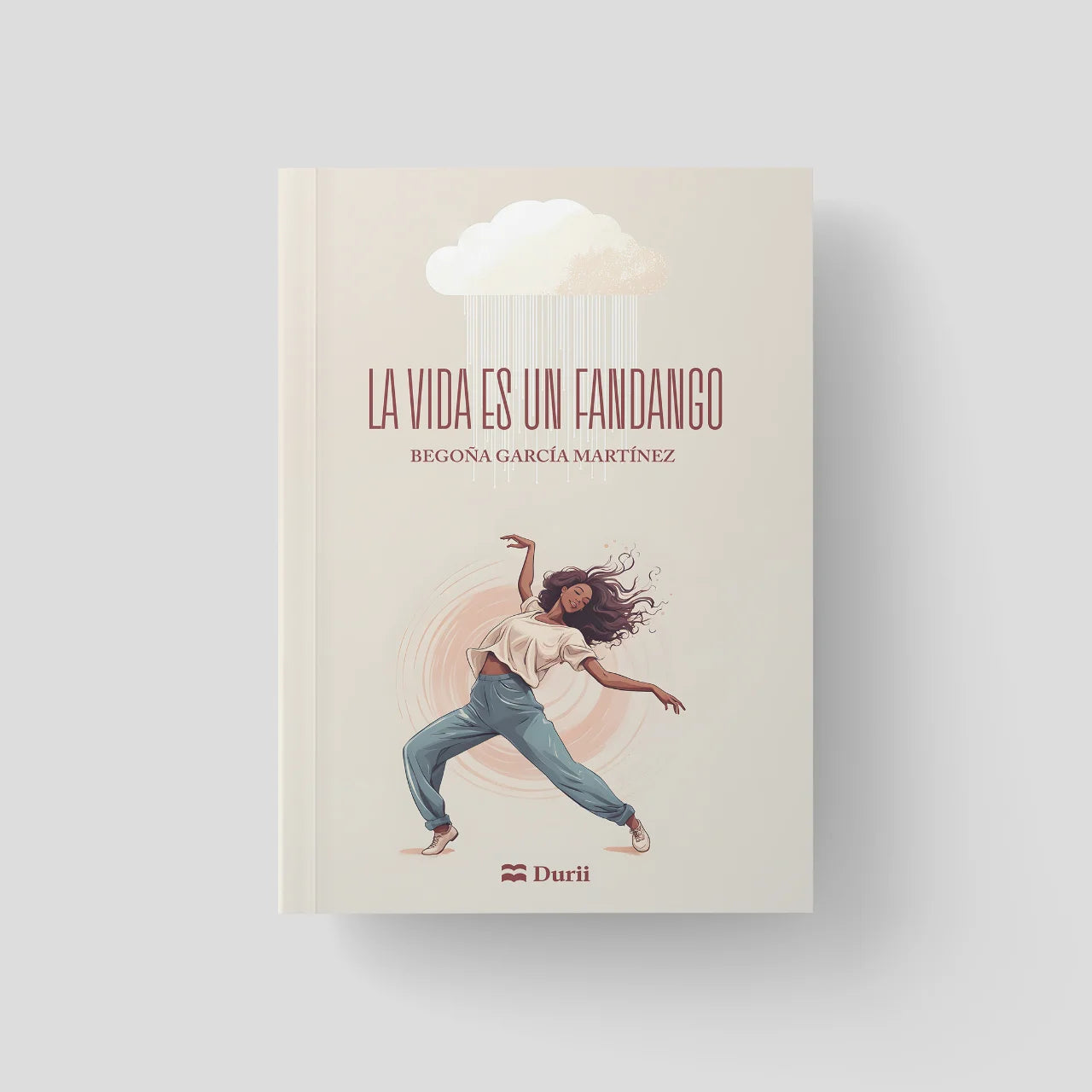
La vida es un fandango
Durii Editorial · Poesía y prosa poética · Poesía · Jóvenes adultos y adultos (+13 años)
Synopsis
Begoña García Martínez opens her collection with an author's note that reads as a statement of intent: poetry as emergency exit, as a way of surviving a fire still burning beneath the skin. From there, the book unfolds in three sections, each titled with an aphorism about dance and devoted to a different stage of emotional grief. The first, «Este baile no es contigo, es conmigo», traces the end of a relationship and the slow learning of how to dance alone, with the sea as refuge and rock climbing as a metaphor for the risks of love. The second, «Lo difícil no es aprenderse el baile, sino, bailar sin vosotros», is the most painful: it gathers the real losses of people close to the author during 2023—among them a friend named Miguel—and turns collective mourning into shared elegy. The third, «No importa lo que dure el baile, lo que verdaderamente importa, es su intensidad», recounts a brief, intense love affair lived between Barcelona and Madrid, punctuated by one poem written entirely in Catalan that deliberately breaks with the language of the rest of the book. The collection closes with two lyric letters the author writes to herself—one from her poetic self, one from her narrative self—and an epilogue that distils the journey into three tenses: we were, we are, we will be. Throughout, musical epigraphs drawn from artists and writers including Benedetti, Bukowski, Elvira Sastre, Karmelo C. Iribarren, and bands such as Fuel Fandango, Viva Suecia and Extremoduro build an explicit soundtrack that places the book within the tradition of contemporary Spanish confessional poetry, while never surrendering a voice that is physical, personal and entirely unaffected.
Machine translation, pending review.
Selling points
- Segundo poemario de una autora con comunidad ya fidelizada desde su ópera prima
- Estructura en tres partes con arco emocional claro, no una simple suma de poemas sueltos
- Incluye un poema íntegro en catalán, gesto poco frecuente en poesía comercial española
- Cada poema abre con epígrafe musical, ideal para contenido cruzado con Spotify y redes
- Aborda el duelo real por la muerte de un amigo con una honestidad poco habitual
- Geografía urbana (Barcelona, Madrid) con potencial de activaciones locales y firmas
Comparable titles
- Ya nadie baila, Elvira Sastre
- Los amores extraños, Marwan
- Home Body, Rupi Kaur
Technical data
- ISBN
- 978-84-10075-13-9
- Format
- Softcover
- Pages
- 96
- Dimensions
- 152 × 228 mm
- Weight
- 234 g
- RRP
- €16.00 (VAT included)
- Publication
- 13 March 2025
- Edition
- Edition 1
- Legal deposit
- M-3122-2025
- Language
- es
- Imprint
- Durii Editorial
- Series
- Poesía y prosa poética
- Age
- Jóvenes adultos y adultos (+13 años)
Classification
Poesía confesional · Poesía de la experiencia · Elegía contemporánea · Prosa poética epistolar
For bookshops and distributors
The price shown includes VAT. Trade terms and orders are in the
Distribution: Azeta in Spain · Panoplia de Libros in Latin America · Direct distribution from the publisher
Rights
Translation rights available for all languages.
«La vida es un fandango» is the second poetry collection by Spanish author Begoña García Martínez, following her debut «Amalgamando latido y verso». Structured in three parts framed as metaphors of dance, the book moves from the end of a romantic relationship through the real grief of losing loved ones in 2023 to a brief, intense new love lived between Barcelona and Madrid. Each poem opens with a song epigraph, from Mario Benedetti's verses to Spanish indie bands such as Fuel Fandango and Viva Suecia, creating a parallel soundtrack that grounds the collection in contemporary Spanish culture. One poem, 'Match point', is written entirely in Catalan, reflecting the bilingual reality of the author's life in Barcelona. The book closes with two lyrical letters the author writes to herself, staging a dialogue between her 'poetic' and 'narrative' selves. Comparable in tone and market position to Elvira Sastre's confessional bestsellers and to Rupi Kaur's internationally successful short-form poetry, this collection offers foreign publishers a commercially proven format: brief, highly quotable verses built around universal themes of grief, love and self-reconstruction, with a distinctly Spanish urban and musical texture that differentiates it from generic self-help poetry.

Begoña García Martínez
Sabadell · 1984
I choose poetry as my emergency exit. I still remember that afternoon when you were no longer there and a wide scale of greys dominated the sky. Words, verses and poems sustain me and bring me closer to my truest self, my most poetic version. The same version that leapt into the void for the first time with «Amalgamando latido y verso» and that now takes flight again with «La vida es un fandango». I evolve verse by verse, searching for a pair of eyes and a poem in which to shelter from the world.
Machine translation, pending review.