
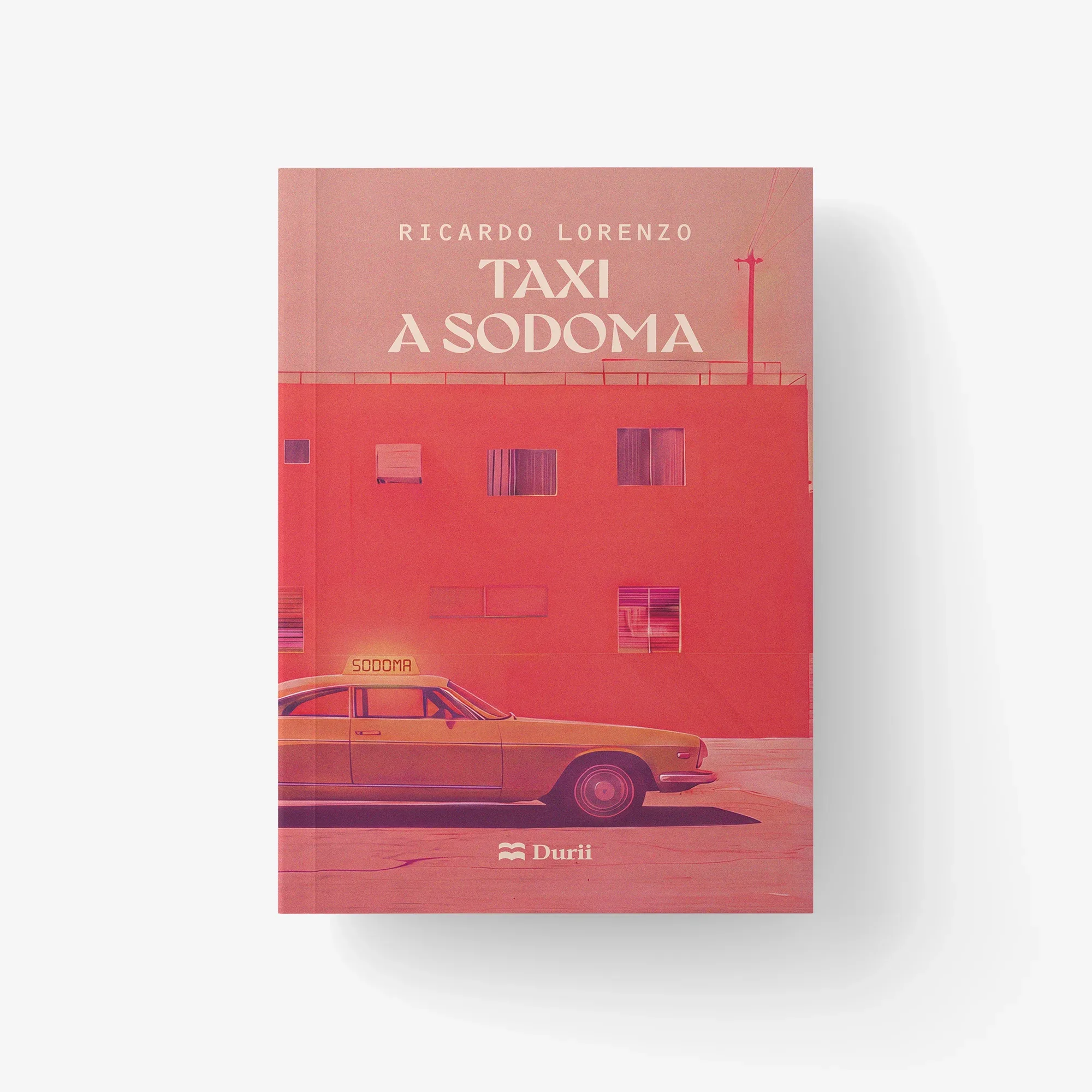
Taxi a Sodoma
Luzia · LGTB · Narrativa · Adultos (+18 años)
Synopsis
Madrid, the nineties. In the small hours, the editor of Conmoción — one of those lurid weeklies that no longer exist — wakes his star reporter, Paco Lavetusta, with a bombshell: the city's archbishop, Arnulfo Roca Valente, has been found dead in his own flat, hanged inside a wardrobe, wearing a papal mitre, nipple clamps, and his testicles bound with the tail hair of a wild young stallion. The police immediately arrest the prime suspect: Cipriano Almonacid, known as Manos, the dominant rent boy the scene calls El Castigador de Villacañas. Lavetusta — forty-five years old, a cat named Ulises, a boyfriend on Erasmus in Venice and a notebook crammed with contacts in every bar in Chueca — suspects from the very first moment that the case is nowhere near that simple. He begins pulling at the thread alongside his photographer Wally, German correspondent Barbara Platsch and a cast of characters as absurd as they are endearing: Pepe el Cojo, rent-boy agent; El Ácido, best friend and rival in promiscuity; a gay Christian association; sadomasochist visual artists; a clandestine art dealer; and a lawyer who goes by Lola Penales. As the investigation unfolds, the archbishop's double life comes to light: a man who in public led demonstrations against divorce, abortion and homosexuality, and who in private was an obsessive collector of erotic art, a devoted reader of the Marquis de Sade and a soprano cross-dresser who staged entire operas for his trusted rent boy. The past explains the present: as a boy, Roca Valente watched fascists take away his parents — a Republican schoolteacher and a Socialist doctor — to be shot; from that moment he decided to become the worst of men so that one day he could take his revenge from within the Church itself. While Manos survives a poisoning attempt in prison and another in hospital, Lavetusta and his allies mount a rescue operation that veers into farce, leak explosive documents to the German and Spanish press, and discover that the archbishop's will names his former rent boy as his sole heir. Running alongside all this, Lavetusta pulls Andrés — an ex-lover he calls Sito — back from the edge of self-destruction: a former mod turned existentialist punk, part-time cannabis dealer and devoted reader of Cervantes, with whom he begins a tender, lopsided and happy relationship. Between Basque pintxos, drag-queen parties and lightning trips to Berlin, Taxi a Sodoma builds a choral, irreverent and erudite panorama of investigative journalism, institutional hypocrisy and a gay community that decides, against every literary tradition, to be happy.
Machine translation, pending review.
Selling points
- Segunda entrega de una trilogía real pero autoconclusiva, con un caso policial que se resuelve por completo dentro del libro.
- Retrato coral y felizmente promiscuo de la comunidad gay madrileña de los noventa, sin dramatismo ni disculpas.
- Sátira anticlerical documentada con citas reales de obispos españoles, mezclando ficción y crónica sin previo aviso.
- Voz narrativa gamberra y erudita que cita a Cervantes, Sade y Lautréamont con la naturalidad de un cuplé.
- Estructura de thriller periodístico con ritmo de comedia, ideal para lectores de 'Primera plana' y Billy Wilder.
- Ambientación real y verificable del Madrid gay de los noventa: bares, saunas y calles que aún existen o se recuerdan.
- Personajes secundarios memorables —drag queens, monjas enamoradas, chaperos manchegos— con vida propia más allá de la trama.
- Escrito por un autor con trayectoria en periodismo y ensayo LGTBI, lo que aporta autenticidad documental al humor.
Comparable titles
- Las malas, Camila Sosa Villada
- My Government Means to Kill Me, Rasheed Newson
- Bunny, Mona Awad
Technical data
- ISBN
- 978-84-10075-18-4
- Format
- Softcover
- Pages
- 538
- Dimensions
- 144 × 233 mm
- Weight
- 600 g
- RRP
- €24.00 (VAT included)
- Publication
- 21 September 2026
- Edition
- Edition 1
- Legal deposit
- M-21822-2026
- Language
- spa
- Imprint
- Luzia
- Series
- LGTB
- Age
- Adultos (+18 años)
- Ebook
- 978-84-10075-51-1 · €8.00
Classification
novela policiaca paródica · sátira anticlerical · picaresca contemporánea · narrativa LGTBI coral · novela de la Movida madrileña
For bookshops and distributors
The price shown includes VAT. Trade terms and orders are in the
Distribution: Azeta in Spain · Panoplia de Libros in Latin America · Direct distribution from the publisher
Rights
Translation rights available for all languages.
TAXI A SODOMA is the second installment of a trilogy that began with BIENVENIDOS A SODOMA, but it reads perfectly as a standalone dark comedy. Set in 1990s Madrid, it follows veteran tabloid journalist Paco Lavetusta as he investigates the death of the city's Archbishop, found hanged in a secret dungeon inside his own home, wearing a papal mitre and bound with horsehair. The prime suspect is Manos, a hustler specializing in S&M services, but Lavetusta suspects the truth is far stranger: an elaborately staged suicide by a man who spent his whole life building a double life. Written with the pace of a Billy Wilder newsroom comedy and the erudition of a literary essay, the novel weaves real historical references —Spanish bishops' actual homophobic statements, the AIDS crisis, Francoist repression— into a wildly entertaining plot full of drag queens, S&M artists, Basque pintxo bars, and a joyfully promiscuous ensemble cast that refuses to treat homosexuality as tragedy. At its emotional core is Lavetusta's tender relationship with a much younger ex-punk obsessed with Don Quixote, offering warmth beneath the satire. TAXI A SODOMA will appeal to international readers of camp, queer dark comedy in the vein of Rasheed Newson's MY GOVERNMENT MEANS TO KILL ME or the anticlerical satire of Almodóvar's films. It offers foreign publishers a rare combination: a page-turning mystery plot, a vivid historical setting, and a genuinely joyful, sex-positive queer sensibility apart from trauma-centered LGBTQ narratives. Rights are available for translation. The author, Ricardo Lorenzo, is an Argentine-born, Madrid-based journalist with a long career covering LGBTQ and AIDS-related issues, lending the satire real documentary weight.