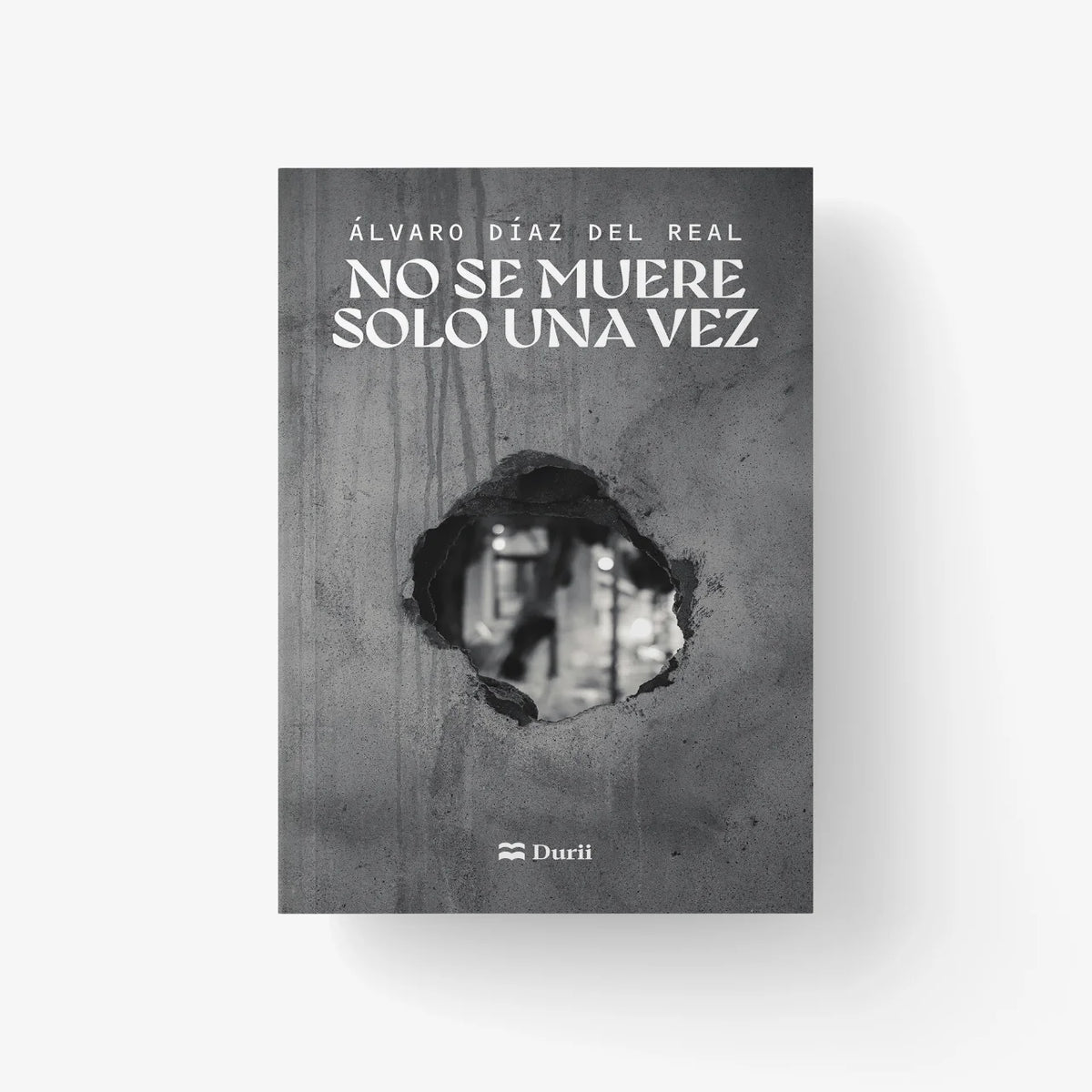
No se muere solo una vez
Durii Editorial · Contemporánea · Narrativa · Adultos (+18 años)
Synopsis
Gael Landaluce Romero is forty, writes a travel column for a digital magazine, and has learned to describe his failed relationships in the precise vocabulary of psychology: intermittent reinforcement, limerence, emotional dependency. He can name everything. He cannot stop anything. He meets Anaís Rodríguez on a dating app after months of hollow encounters. She has just left Agathe, a narcissistic Frenchwoman who subjected her to years of systematic emotional control, and she comes to the relationship with one clear condition: no hierarchies, no exclusivity, total freedom for both of them. Gael, who considers himself enlightened and ready to explore non-normative bonds, agrees with pleasure. What he does not anticipate is the degree to which that agreed-upon freedom will become the perfect mechanism for his own destruction. To survive the uncertainty Anaís imposes—her silences, her disappearances, her sudden reconciliations—Gael drafts, on a night flight to the Caribbean, Las Leyes de la Fratría: seventeen articles governing what he calls their «unión libre y voluntaria». It is a document that is absurd and solemn in equal measure, proof that the person most in need of control is the one who has least of it. The novel moves along two parallel tracks. One is the relationship with Anaís, rendered with clinical precision and without self-pity: the jealousy Gael converts into tactic, the humiliations he accepts and those he does not even recognise as such, the moment she seems to give herself completely and announces that she wants him to meet her family. The other track is the logbooks: dispatches Gael sends to Luisa, his editor and closest friend, from Isla Estevanica and later from the occupied territories of Zebouan Oriental, where he passes himself off as a tourist to slip into a region closed to journalists. These pieces—on colonialism, inequality, migration, dictatorships—are rigorous accounts of other people's realities that function, beneath the surface, as an attempt to escape himself. Unsent letters to Anaís and interspersed poetic passages make visible what journalism, by definition, must leave unsaid. The turning point comes when Gael is detained and held for several days by the local authorities, accused of links to suspicious activities for the simple reason of carrying a book about the territory's history. Back in Madrid, broken, he receives the call he has been waiting weeks for: Anaís wants to see him. What follows is a scene that rearranges everything the reader thought they understood about both of them—a pregnancy, a reconciliation that turns out to be far more calculated than it appears, and a discovery, obtained by means Gael knows he should not have used, that reveals the full extent to which he has been manipulated from the start. Rather than withdraw with dignity, Gael responds with a move of his own: a cold, near-surgical negotiation that stakes his legal paternity against continued access to the only drug keeping him alive. No se muere solo una vez follows a narrator who can diagnose with pinpoint accuracy the mechanism that is destroying him and who, even so, cannot stop feeding it—right up to an ending that leaves the reader, not the protagonist, the final word on what has actually happened.
Machine translation, pending review.
Selling points
- Una voz narrativa que analiza su propia adicción emocional con precisión clínica y no logra, aun así, dejar de alimentarla.
- Estructura dual: la relación tóxica y los reportajes de viaje por territorios reales en conflicto se iluminan mutuamente.
- Las Leyes de la Fratría: un documento paródico que convierte el amor líquido contemporáneo en materia narrativa memorable.
- Un final abierto que traslada al lector la responsabilidad de juzgar —o comprender— al protagonista.
- Escrita por un letrista de rock: prosa con la urgencia y el riesgo de una canción, sin red.
Comparable titles
- Un amor, Sara Mesa
- Serotonina, Michel Houellebecq
- Beautiful World, Where Are You, Sally Rooney
Technical data
- ISBN
- 978-84-10075-75-7
- Format
- Softcover
- Pages
- 164
- Dimensions
- 144 × 233 mm
- Weight
- 228 g
- RRP
- €18.00 (VAT included)
- Publication
- 30 April 2026
- Edition
- Edition 1
- Legal deposit
- M-9025-2026
- Language
- spa
- Imprint
- Durii Editorial
- Series
- Contemporánea
- Age
- Adultos (+18 años)
- Ebook
- 978-84-10075-76-4 · €8.00
Classification
Autoficción · Novela de la obsesión amorosa · Diario de viaje ficcionalizado · Sátira social y política · Novela epistolar parcial
For bookshops and distributors
The price shown includes VAT. Trade terms and orders are in the
Distribution: Azeta in Spain · Panoplia de Libros in Latin America · Direct distribution from the publisher
Rights
Translation rights available for all languages.
NO SE MUERE SOLO UNA VEZ (YOU DON'T DIE ONLY ONCE) is a corrosive, confessional novel about emotional addiction, told by a narrator who can diagnose his own toxic patterns with clinical precision — love bombing, intermittent reinforcement, limerence — and still cannot stop feeding them. Gael Landaluce, a forty-year-old travel journalist, meets Anaís on a dating app shortly after she leaves a narcissistic marriage. She proposes an open relationship with no hierarchies; he agrees, convinced he has deconstructed his own masculinity. On a night flight to the Caribbean, he drafts 'The Laws of the Fratría,' seventeen absurd, quasi-legal articles meant to turn dependency into a rational pact. The novel alternates this relationship with Gael's dispatches to his editor Luisa, sent from a fictionalized Caribbean island and from a disputed North African territory evoking Western Sahara. These travel chronicles — on colonialism, migration, dictatorship — function as a failed escape: wherever Gael goes, his obsession travels with him, surfacing in unsent letters and interspersed prose poems. The story escalates through a pregnancy, an engineered reconciliation, and a betrayal that Gael uncovers through increasingly desperate means, culminating in a cold, almost surgical negotiation over his own paternal rights — carried out with the same lucidity he has used to narrate his own collapse. Written by Álvaro Díaz del Real, a rock lyricist and vocalist publishing his third book, the prose carries the urgency of song lyrics: direct, unadorned, unafraid of ugliness. For readers of Michel Houellebecq's cynical male narrators, Sally Rooney's structural blend of correspondence and plot, and Sara Mesa's cold dissection of unequal relationships, this novel offers a genuinely uncomfortable, darkly funny take on contemporary love addiction — one that leaves judgment of its narrator entirely in the reader's hands.

Álvaro Díaz del Real
Sevilla · 1983
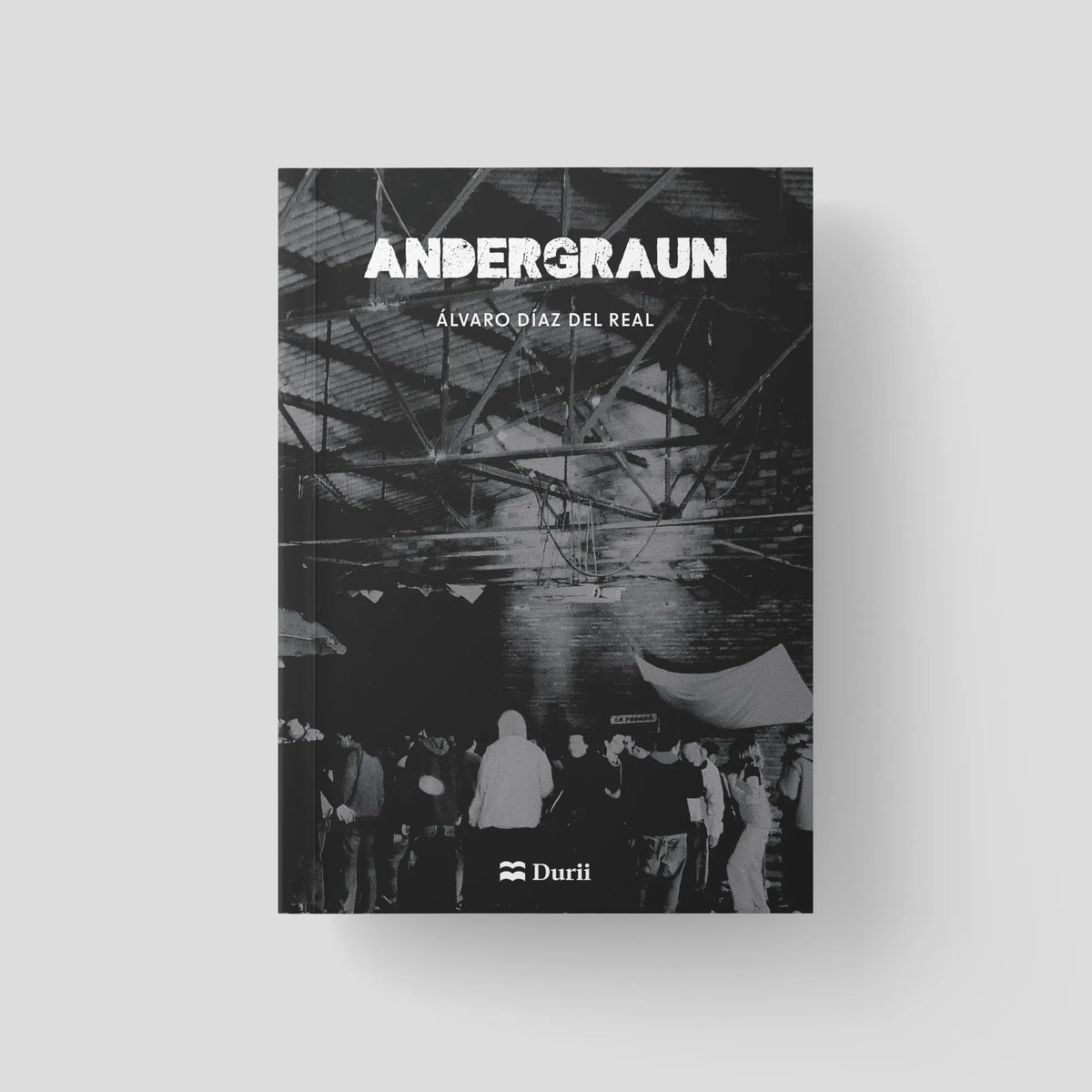
Sevilla, 1983. Lyricist and vocalist for rock bands including Campito Fresa and Bisonte Blanco, he writes from the gut with the same urgency with which he sings—no safe distance, no safety net. He made his debut with Instrucciones para ver un fantasma (2020). Andergraun (Durii, 2024) is the chronicle of a generation that took over abandoned farmhouses to spread rave subculture across Andalusia, and in doing so picked a fight with tradition.
Machine translation, pending review.