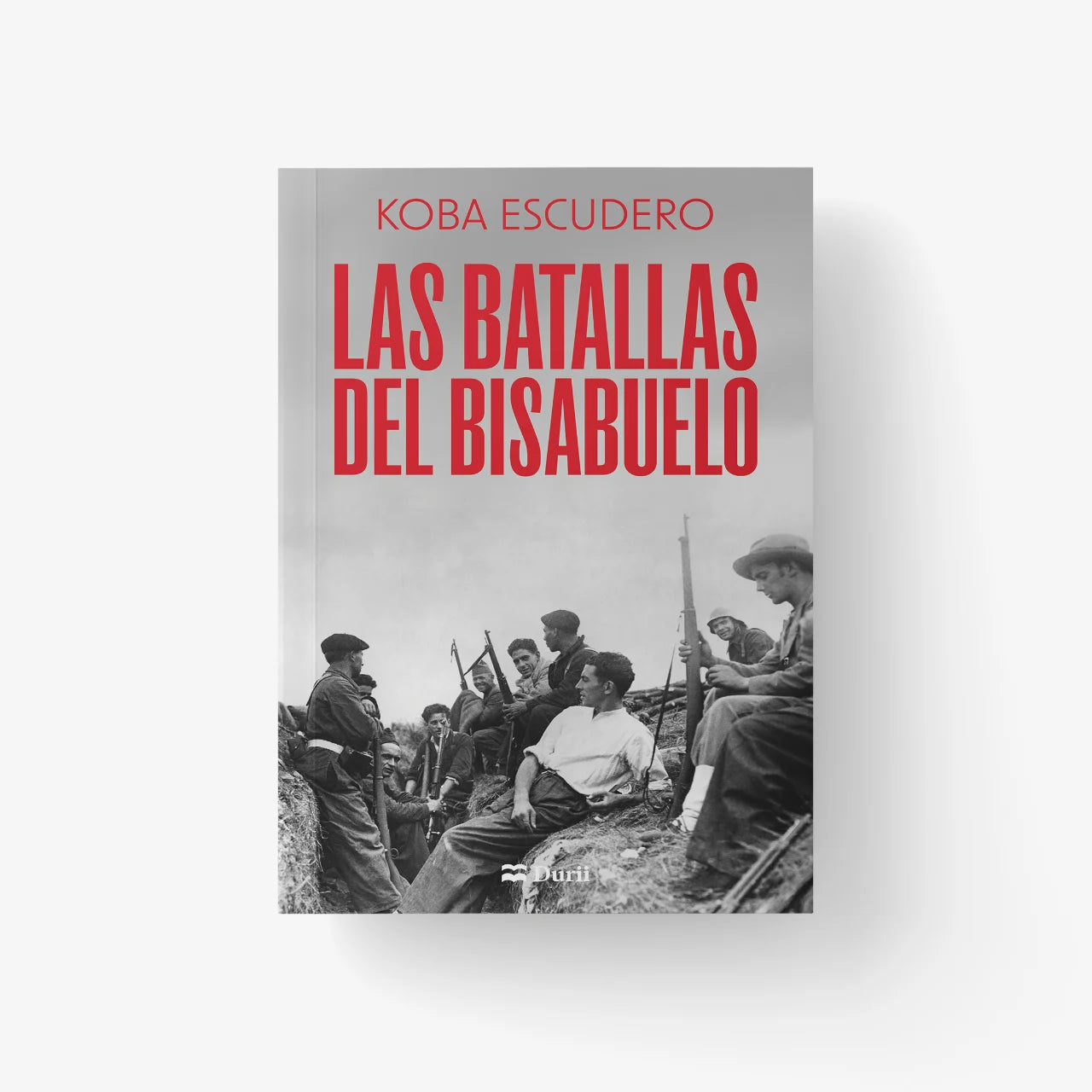
Las batallas del bisabuelo
Durii Editorial · Histórica · Narrativa · Adultos (+18 años)
Synopsis
In a village in La Mancha—Villanueva de los Infantes, 1907—Pablo Hernández Jiménez is born to a family of day labourers, grandson of a founding socialist who bequeaths him, without knowing it, the book that will shape his life: The Communist Manifesto. Raised between his father's cruelty and the hardship of the land, Pablo leaves his village at twenty-one and walks to Valdepeñas, a town thriving on the wine trade, in search of work that will not break his back for the local boss. At Ramiro Moreno's bodega he leads his first strike alongside Sergio Gómez, forging a brotherhood that will last the length of the novel. Around them a core of comrades gradually forms—the timid former priest Julián, the mixed-race Elena, the battered Jimena, the disciplined Tomasa and, later, the Jaén-born Manuela—who will organise together in the Valdepeñas communist cell, through strikes, Party-funded robberies and the relentless pursuit of the Civil Guard and local landowners. With the arrival of the Second Republic, Pablo and Sergio are elected to the town council; their chosen family will take on positions of responsibility when the Popular Front wins the Ayuntamiento in 1936. The Civil War takes them to defend Valdepeñas against the fifth column, to fight at Teruel under Enrique Líster's command and to survive the siege of Madrid, before they are captured and sent to the dreaded Fuerte de San Cristóbal in Pamplona. There, alongside some seven hundred fellow prisoners, they take part in the largest escape in Spanish penitentiary history, surviving bullets and the cold of the Pyrenees until they cross into France. Exile is no ending: the French concentration camps at Argelès push them on to the Soviet Union, where they work in Moscow factories before enlisting, on forged papers, in the Red Army to fight fascism from the siege of Moscow to the fall of Berlin, by way of Leningrad and Poland. The war will take more than one comrade from them, but not their conviction. When the Third Reich falls there is no reward for the Spanish antifascists: no Allied power is willing to liberate Spain from Franco. The Party decides to infiltrate Pablo and his companions—under code names and false passports—into the anti-Francoist guerrilla operating in the hills of Ciudad Real, where they will fight as maquis for years until the Civil Guard hunts them down. Drawing on more than a decade of research in official archives, private documents and oral testimonies gathered in Valdepeñas, Las batallas del bisabuelo reconstructs, in the speech and customs of La Mancha, the silenced history of those who fought across two wars, four countries and thirty years, with no homeland but the freedom of their own people.
Machine translation, pending review.
Selling points
- Basada en una década real de investigación en archivos, documentos privados y testimonios orales recogidos en Valdepeñas.
- Reconstruye la mayor fuga carcelaria de la historia de España, la del Fuerte de San Cristóbal.
- Narra la presencia española en el Ejército Rojo durante la Segunda Guerra Mundial, del sitio de Moscú a la caída de Berlín.
- Retrata con rigor documental la guerrilla maqui en los montes de Ciudad Real, tema poco explorado en la novela histórica española.
- Voz narrativa fiel al habla manchega, con glosario a pie de página, poco frecuente en el género.
- Estructura coral con siete protagonistas y arcos propios, ideal para lectores de sagas familiares históricas.
- Incluye el testimonio explícito de las presas antifascistas, homenaje directo a Dulce Chacón.
- Conecta con el actual auge de la memoria histórica y los debates sobre la Ley de Memoria Democrática.
Comparable titles
- El día en que dejamos de jugar, Antonio Iturbe
- Un millón de gotas, Víctor del Árbol
- The Huntress, Kate Quinn
Technical data
- ISBN
- 978-84-10075-42-9
- Format
- Softcover
- Pages
- 376
- Dimensions
- 152 × 228 mm
- Weight
- 800 g
- RRP
- €20.00 (VAT included)
- Publication
- 3 December 2025
- Edition
- Edition 1
- Legal deposit
- M-23969-2025
- Language
- es
- Imprint
- Durii Editorial
- Series
- Histórica
- Age
- Adultos (+18 años)
- Ebook
- 978-84-10075-43-6 · €8.00
Classification
Novela de la Guerra Civil española · Saga familiar coral · Novela testimonial · Ficción bélica
For bookshops and distributors
The price shown includes VAT. Trade terms and orders are in the
Distribution: Azeta in Spain · Panoplia de Libros in Latin America · Direct distribution from the publisher
Rights
Translation rights available for all languages.
LAS BATALLAS DEL BISABUELO (My Great-Grandfather's Battles) is a sweeping historical novel that follows Pablo Hernández, a young laborer from rural Spain, as he escapes poverty in 1928 and finds a chosen family among communist militants in the wine town of Valdepeñas. Based on ten years of archival research and oral testimony, the novel traces this group of seven comrades through the rise and fall of the Second Spanish Republic, the Civil War, and their exile to the Soviet Union, where they enlist in the Red Army and fight the Nazis from the siege of Moscow to the fall of Berlin. The story closes with their clandestine return to Spain as anti-Francoist guerrilla fighters (maquis) in the mountains of Ciudad Real. Written in a richly regional voice preserving the dialect of La Mancha, the novel combines the intimacy of a family saga with the scope of a continental war epic spanning Spain, France, the USSR and Germany across three decades. It gives voice to two little-known historical episodes: the largest prison break in Spanish history, at the Fuerte de San Cristóbal, and the presence of Spanish exiles fighting within the Red Army during World War II. For international readers, the book offers the emotional accessibility of recent bestsellers about women and resistance in World War II, combined with the documentary weight of Spanish memory novels. Its structure — divided into clearly marked chronological 'battles' — lends itself naturally to serialized adaptation. The novel is especially well positioned for markets with active interest in Spanish Civil War history, anti-fascist memory, and World War II Eastern Front narratives, including the UK, the US, France, Germany, and Latin America. Foreign rights are available and translation samples can be provided upon request.

Koba Escudero
Valdepeñas · 1997
He was barely six years old when a Christmas gift changed everything: a 250-page atlas of characters and events from the Roman Republic. It was not a children's book, but for him it was the key to an infinite universe. From that moment on, he devoured El Código Da Vinci, La Catedral del Mar, and whatever else he could get his hands on. History became an obsession, a calling. He went on to study it at university, but life had other plans. For personal reasons, he left that path to devote himself to his other great passion: healthcare. Today he returns to his first love through writing, bringing both worlds together on the page.
Machine translation, pending review.